

What’s Best for Your Aging Loved One: Guidance from Graceful Transitions
- Michael Dworshak

- Sep 24, 2025
- 3 min read
Updated: Jan 14
Making care decisions for an aging loved one is never simple. Whether it's a parent, partner, or another cherished family member, these choices often come with a swirl of emotions—love, uncertainty, and sometimes guilt.
Families exploring Bozeman assisted living, Billings memory care, or other Montana senior living options often find clarity by evaluating needs, safety, and quality of life first.
At Graceful Transitions, we understand the weight of these decisions. Our mission is to help families navigate this season of life with clarity, compassion, and confidence.
If you're asking, "What's the right next step?"—you're already acting out of deep care.
Here’s how to approach this journey with both your head and your heart.
1. Start with an Honest Assessment
Understanding their true needs is the foundation of every good decision:
Physical Health: Are there chronic conditions or mobility issues?
Cognitive Changes: Any memory loss, confusion, or diagnosis of dementia?
Daily Tasks: Can they manage meals, medications, and hygiene on their own?
Safety Concerns: Is their current living situation secure?
Emotional & Social Wellbeing: Are they isolated, anxious, or lonely?
These questions create a clear picture of where support is most needed.
2. Explore the Right Living Options
There are many paths forward—each with unique benefits:
Aging in Place: With home modifications and support from family or in-home caregivers.
Independent Living: For those still active but wanting a social, maintenance-free lifestyle.
Assisted Living: For help with daily tasks while maintaining some independence.
Memory Care: For Alzheimer’s or other forms of dementia.
Skilled Nursing: When medical support becomes a daily necessity.
Living with Family: A deeply personal choice that requires shared commitment.
There’s no one-size-fits-all. The goal is a safe, supportive, and dignified environment.
3. Get Legal & Financial Documents in Place
Taking care of the paperwork ensures their wishes—and your role—are clearly defined:
Durable Power of Attorney (medical and financial)
Advance Directive or Living Will
Estate Planning and Will Review
Long-Term Care Planning, including insurance or Medicaid eligibility
These conversations aren’t always easy, but they’re incredibly important.
4. Include Your Loved One in the Conversation
Even when mental or physical abilities begin to decline, giving your loved one a voice in the process helps maintain their sense of identity and control. Listen with patience. Share plans with gentleness. When possible, let them guide you.
5. Lean on Family, But Center on the Loved One
Family dynamics can complicate things. Some will want to help; others may resist change. Keep the focus on what your aging loved one needs—not on pleasing everyone. It’s okay if not everyone agrees, as long as decisions are rooted in love and reason.
6. Let Go of Perfect—Choose What’s Best
This journey is rarely black and white. You might wrestle with doubt or guilt. But doing your best with the information and resources you have is enough.
You're not failing them by making changes—you’re honoring them by ensuring they’re safe, supported, and cared for.
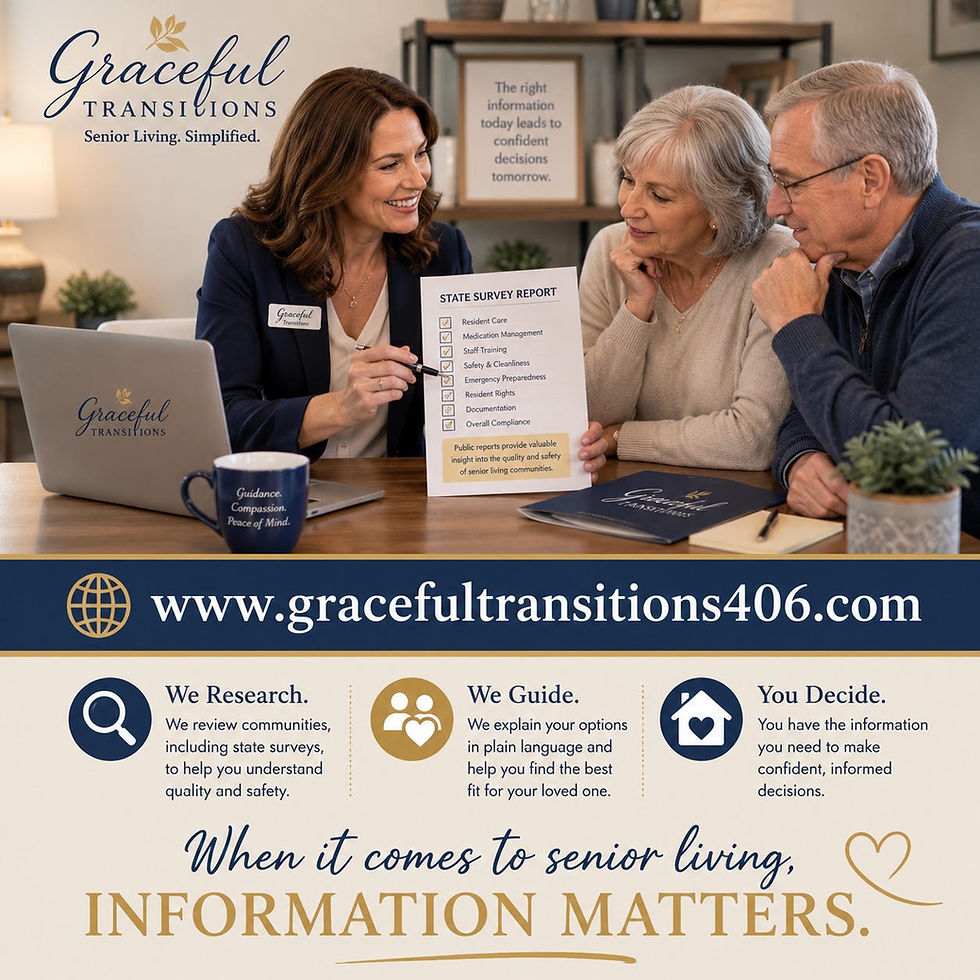
At Graceful Transitions, we’re here to walk beside you as you make these decisions—not with pressure, but with peace, guidance, and support. Graceful Transitions helps families find Bozeman assisted living, Butte assisted living, and Billings memory care communities that meet care needs while preserving dignity and comfort.
Visit www.gracefultransitions406.com to explore resources, schedule a conversation, or simply breathe a little easier knowing you're not alone.


Comments